
Complete Guide to Property Registration in Gurgaon 2025
Buying a property in Gurgaon is one of the biggest financial and emotional decisions in life. Whether you’re investing in a luxury apartment, a residential plot, or a commercial space, completing the property registration process is crucial. It’s the final step that legally confirms you as the owner of your new property.
However, property registration involves a few legal formalities, document verification, and payment of stamp duty and registration charges. This guide will help you understand the entire process in a simple and clear way so you can register your property in Gurgaon smoothly and confidently.
What is Property Registration and Why Does It Matter?
Property registration means officially recording your ownership of a property in the government’s land records. Once your property is registered, your name is entered as the legal owner in the government database.In Gurgaon, this process is governed by the Registration Act of 1908 and managed by the Department of Revenue, Government of Haryana. Property registration is not just a formality, it's your legal protection.
Here’s why it matters:
It provides proof of ownership and prevents any ownership disputes in the future.
It makes you eligible to sell, lease, or mortgage the property.
It protects your property from fraud or illegal possession.
It ensures your investment is legally valid in the eyes of law.
Without registration, your ownership claim is incomplete even if you’ve paid for the property.
Documents Required for Property Registration in Gurgaon
Before visiting the Sub Registrar Office, make sure you have all the required documents ready. Missing even one paper can delay your registration process.
Here’s a complete list of documents needed:
1. Sale Deed
When it comes to property registration, the Sale Deed is the most crucial paperwork that confirms ownership transfer
It must be signed by both parties.
It should be registered with the Sub Registrar to be legally valid.
2. Ownership Proof
The seller must provide original title documents and past sale deeds to confirm that they legally own the property.
3. Encumbrance Certificate
This certificate ensures that the property is free from any legal or financial liabilities, such as loans or disputes.
It typically covers the last 12–15 years of the property’s history.
4. Government Issued ID & Address Proof
Both buyer and seller must provide valid ID and address proof such as:
Aadhaar card
PAN card (mandatory for transactions above ₹10 lakh)
Passport or Voter ID
5. Passport Size Photographs
Usually, two photographs of both buyer and seller are required.
6. Power of Attorney (If Applicable)
If the buyer or seller is not personally attending the registration, a Power of Attorney (POA) must be presented to authorize someone else to act on their behalf.
7. NOC from Builder or Society
For flats in group housing societies or builder floors, a No Objection Certificate (NOC) from the builder or the Residents’ Welfare Association is mandatory.
8. Stamp Duty and Registration Fee Receipts
You must show proof that all stamp duty and registration charges have been paid to the Haryana government.
9. Allotment Letter & Possession Certificate
For newly constructed properties or builder projects, these documents confirm that the developer has handed over the unit.
10. Additional Supporting Documents (Case to Case)
Depending on your property type, you might also need:
Mutation Certificate
Property Tax Receipts
Building Plan Approval
Occupancy Certificate or Completion Certificate
Stamp Duty and Registration Charges in Gurgaon (2025)
Before registering your property, you need to pay stamp duty and registration charges to the state government. These charges are mandatory and act as a legal tax on the property transaction.
What is Stamp Duty?
Stamp duty is a tax paid to the government when ownership of a property is transferred. It serves as legal evidence of the sale and makes your Sale Deed enforceable in court.
What is the Registration Fee?
Registration fee is the charge paid to officially record your ownership in government land records through the Sub Registrar’s Office.
Stamp Duty Rates in Gurgaon for 2025
Stamp duty in Gurgaon varies based on the buyer’s gender and whether the property is located in an urban or rural area.
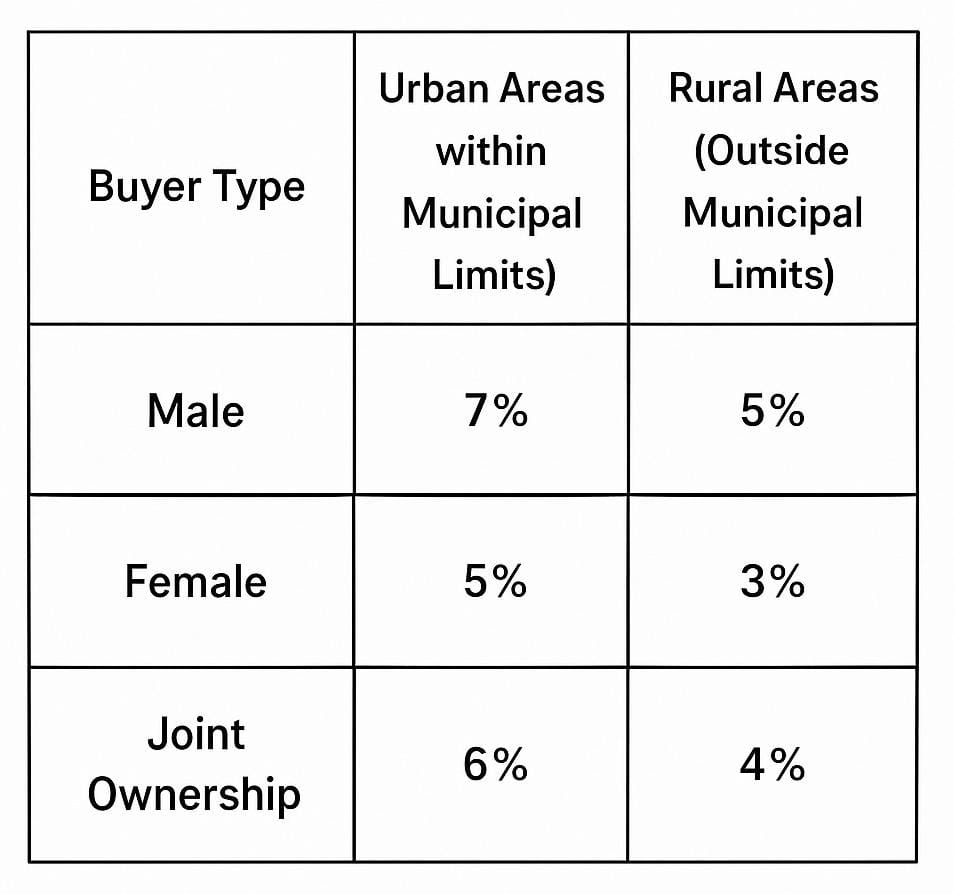
So, for example:
If a man buys a flat worth ₹1 crore in an urban area of Gurgaon, he will pay ₹7 lakh as stamp duty.
If a woman buys the same property, she will pay ₹5 lakh.
Registration Charges in Gurgaon
Registration charges in Haryana are fixed and depend on the value of the property. Here’s a breakdown:
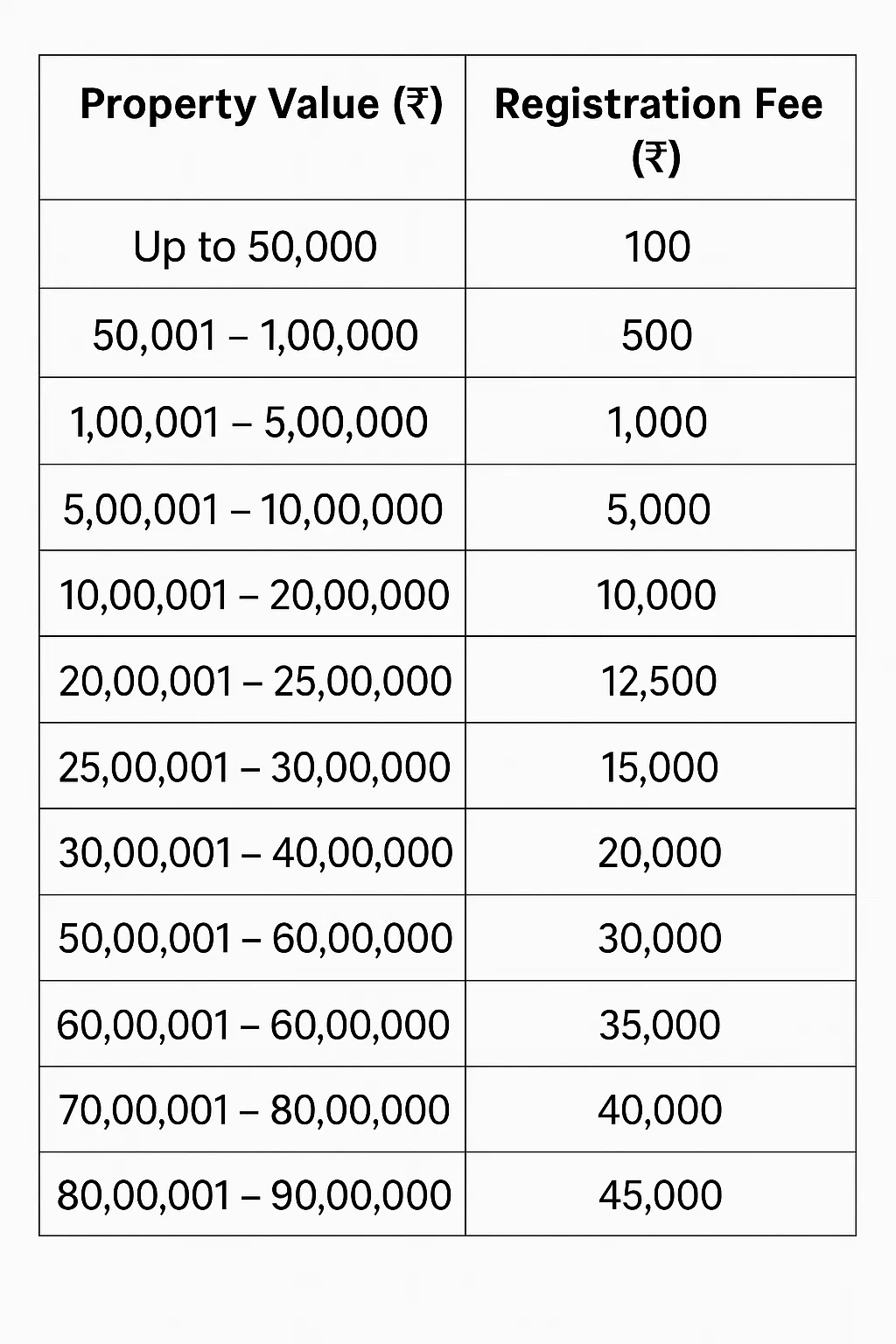
These fees may be revised by the government periodically, so it’s best to check the latest rates before making payment.
Where and How to Register a Property in Gurgaon
All property registrations are carried out at the Sub Registrar Office (SRO) under whose jurisdiction your property falls.
Step by Step Property Registration Process:
Visit the Jamabandi Haryana Portal
Go to https://jamabandi.nic.in to book your appointment online and calculate your stamp duty and registration fee.Prepare Your Documents
Collect and organize all the necessary documents listed earlier. Ensure they’re accurate and up to date.Pay the Stamp Duty and Registration Fees
Payments can be made online or at authorized banks. Keep the receipts safely; they are mandatory for registration.Visit the Sub Registrar Office
On your appointment date, visit the SRO with original documents, photocopies, and your witnesses.Verification by Sub-Registrar
The Sub Registrar will verify all documents, IDs, and payment proofs.Sign the Sale Deed
Both the buyer and seller must sign the Sale Deed while witnesses are present to confirm the transaction.Biometric and Photograph Capture
Biometric data and photos of both parties are recorded for official records.Receive the Registered Sale Deed
Once the registration is completed, you’ll receive a digitally signed Sale Deed proof of your legal ownership.
Quick Tips for a Smooth Registration Process
Double check all spelling and property details in documents.
Ensure there are no pending dues such as maintenance or electricity bills.
Carry both originals and photocopies of all paperwork.
If you’re an NRI or absentee buyer, issue a legally registered Power of Attorney to a trusted representative.
Always verify property ownership through the Haryana Jamabandi portal before making payment.
Frequently Asked Questions
1. List of essential documents for property registration in Gurgaon
You’ll need your Sale Deed, Encumbrance Certificate, title papers, ID proofs, NOC, stamp duty and registration fee receipts, and building plan approval if applicable.
2. Is an Aadhaar card mandatory for property registration?
Yes. Aadhaar is mandatory as it’s used as a valid identity proof for both buyer and seller.
3. What is the role of Sale Deed in registration?
It is the main document that officially records the transfer of ownership between the buyer and seller.
4. How much will you pay as stamp duty and registration fees in Gurgaon?
Stamp duty ranges between 3% and 7%, depending on gender and location. Registration fee varies from ₹100 to ₹45,000 depending on property value.
5. Can I register property online in Gurgaon?
You can pay fees and book appointments online, but physical presence at the Sub Registrar Office is mandatory for verification and signing.
6. How long does the registration process take?
Usually, the entire process takes 1–2 working days once your appointment is confirmed.
7. What happens if a property is not registered?
Without registration, ownership is not legally valid. You cannot sell, mortgage, or claim legal rights over the property.
8. Can NRIs register property remotely?
Yes. NRIs can authorize a local representative through a registered Power of Attorney to complete the registration on their behalf.
9. What is an Encumbrance Certificate and why is it needed?
It shows that the property is free from any financial liabilities, disputes, or unpaid loans ensuring a clear title for the buyer.
10. Where can I check property records in Gurgaon?
Visit the official Jamabandi Haryana portal to view land records, mutation details, and ownership status online.
Conclusion
Property registration in Gurgaon is a vital step in making your property purchase legally valid. With the right documentation, correct stamp duty payments, and timely registration, you can safeguard your investment and avoid future disputes.
Although the process may seem complex at first, being prepared and following each step carefully will make it simple and stress free. Whether you’re buying your first home or expanding your real estate portfolio, understanding property registration ensures complete peace of mind and legal protection.
Disclaimer:
This article is meant for informational purposes only. The charges, rates, and procedures may change as per government updates. Always verify details on the official Haryana Revenue Department or Jamabandi website before proceeding with property registration.

Owner Verified
Ashiana Amarah
 Exact floor hidden for Owner Privacy.
Status: Ready to move
Owner Verified
MVN Athens
Exact floor hidden for Owner Privacy.Status: Ready to move
Owner Verified
Sector 52
Status: Ready to move
Umang Monsoon Breeze
Exact floor hidden for Owner Privacy.Status: Ready to move

Owner Verified
AIPL Joy Gallery
Owner Verified
Pareena Coban Residences
Exact floor hidden for Owner Privacy.Status: Ready to move
Owner Verified
Emaar MGF The Vilas
Exact floor hidden for Owner Privacy.Status: Ready to move
Owner Verified
Zara Aavaas
Exact floor hidden for Owner Privacy.Status: Ready to move

Owner Verified
Vatika Signature Villas
Status: Ready to move

Owner Verified
ATS Marigold
Exact floor hidden for Owner Privacy.Status: Ready to move

Owner Verified
Godrej Zenith
Exact floor hidden for Owner Privacy.Status: Under Construction
Owner Verified
Unitech South Park
Exact floor hidden for Owner Privacy.Status: Under Construction
Related Properties
Owner Verified
Ashiana Amarah
Exact floor hidden for Owner Privacy.Status: Ready to move
Owner Verified
MVN Athens
Exact floor hidden for Owner Privacy.Status: Ready to move
Owner Verified
Sector 52
Status: Ready to move
Umang Monsoon Breeze
Exact floor hidden for Owner Privacy.Status: Ready to move
Owner Verified
AIPL Joy Gallery
Owner Verified
Pareena Coban Residences
Exact floor hidden for Owner Privacy.Status: Ready to move
Owner Verified
Emaar MGF The Vilas
Exact floor hidden for Owner Privacy.Status: Ready to move
Owner Verified
Zara Aavaas
Exact floor hidden for Owner Privacy.Status: Ready to move
Owner Verified
Vatika Signature Villas
Status: Ready to move
Owner Verified
ATS Marigold
Exact floor hidden for Owner Privacy.Status: Ready to move
Owner Verified
Godrej Zenith
Exact floor hidden for Owner Privacy.Status: Under Construction
Owner Verified
Unitech South Park
Exact floor hidden for Owner Privacy.Status: Under Construction