
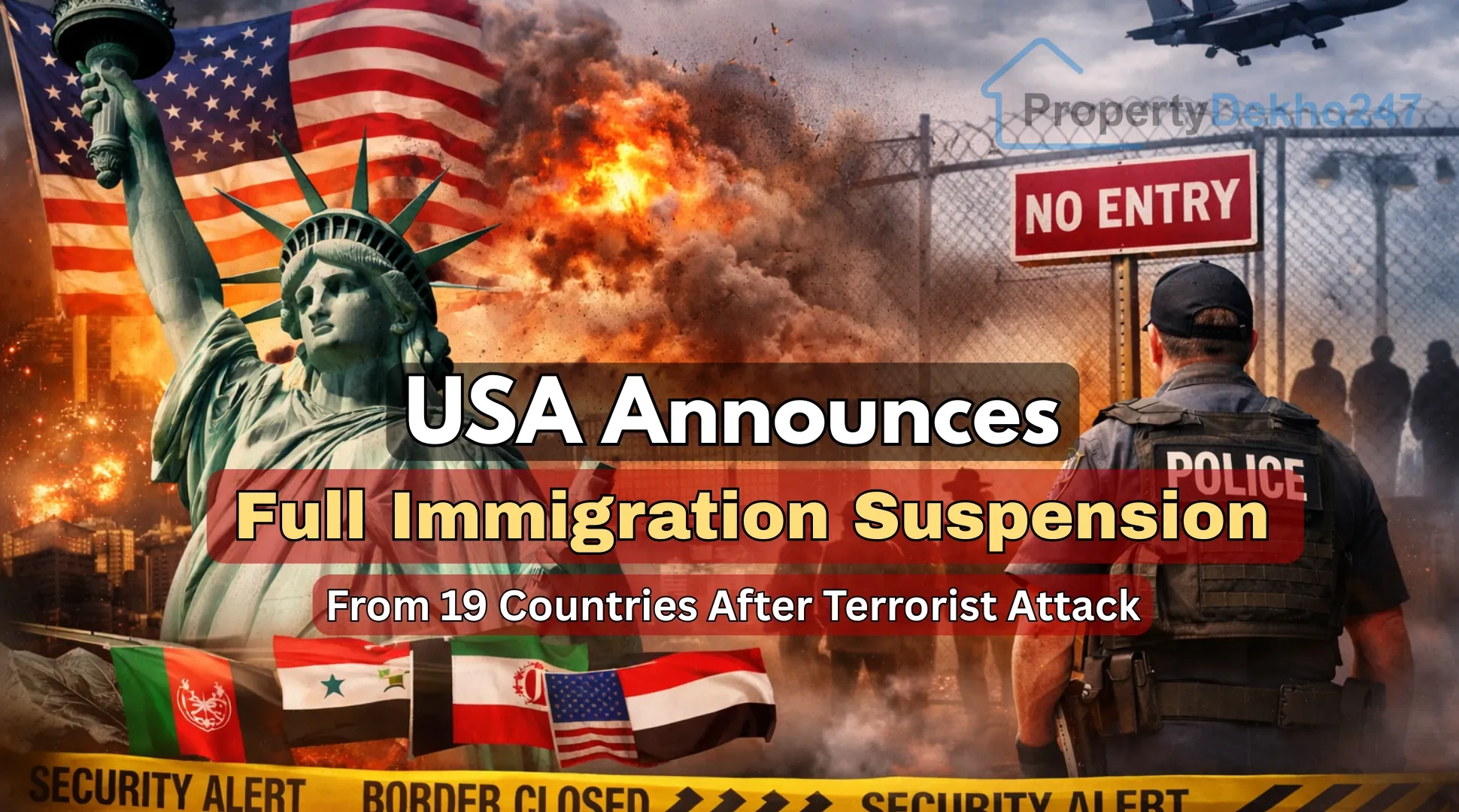
USA Suspends Immigration from 19 Countries After Terror Attack
The United States has formally declared a complete immigration ban on 19 countries after a recent terrorist attack caused a national security issue. The ruling is also among the most prominent immigration-related actions of the recent past and is now subject to intense debate throughout the world.
The direct impact of this move on the visa processing, admission of refugees, family reunification, and employment-based immigration leaves millions of applicants in all parts of the world in uncertainty. This is a detailed blog, where we define the immigration suspension, why it was suspended, who it applies to, and how it will possibly transform the U.S. immigration policy over the next several months.
What Is the U.S. Immigration Suspension Policy?
The new policy has temporarily put a complete stop to the immigration processes of 19 countries that are identified. The U.S. authorities claim that the suspension is supposed to enhance border security and preclude possible threats as the intelligence and vetting systems are checked.
Key Highlights of the Policy
Suspension is applicable to non-immigrant and immigrant visas.
Covering tourist, student, work and family based visas.
Listed country refugees stopped being resettled.
Improved security checks and background checks were initiated.
Periodically re-examinable policy.
This ruling is an indicator of the resurgence of the U.S. government on national security and risk-based immigration controls.
Why Did the USA Suspend Immigration from 19 Countries?
The suspension came soon after a terror attack that the U.S. intelligence agencies attributed to foreign extremist groups. Authorities said that some nations do not have enough data-sharing systems and effective identity verification protocols, and extensive background checks are difficult.
Primary Reasons Behind the Decision
Lacuna in biometric and identity checks.
Little cooperation in intelligence sharing.
Greater fears of cross-border terrorism.
Vetting requirements are too weak.
Risk mitigation on national security.
The U.S. administration stressed that the action was a precautionary rather than a punitive one and that it is aimed at ensuring the safety of the people.
Which Countries Are Affected by the Immigration Ban?
Although the official list can be updated, the suspended countries are reportedly among those countries whose governance is identified as a challenge, conflict zone, or countries that have little security cooperation.
Note: Country lists can be modified when diplomatic negotiations and security checks are in place.
This will be in line with geo-targeted immigration controls, which is a strategy that is becoming common among governments across the globe.
Who Is Most Impacted by This Immigration Suspension?
The suspension has far-reaching consequences on people and organizations:
Directly Affected Groups
Students intending to pursue studies in the U.S.
Experienced workers on H-1B, L-1, and working visas.
Approving reunification in families.
Refugees and asylum seekers
Business travelers and tourists.
Indirect Impact
American colleges and research institutions.
Employers who use global talent.
Multinational businesses
International contacts with the affected nations.
Years of planning, financial input and documentation is put on hold to many applicants.
Legal and Humanitarian Concerns
Human rights groups and immigration activists have been concerned about:
Extended family breakups.
Effect on displaced conflict refugees.
Lack of clarity on timelines
Possible discrimination claims.
But U.S. officials insist that constitutional protections and humanitarian exemptions can be used in some instances, but this is subject to review.
How Long Will the Immigration Suspension Last?
The suspension has been termed as provisional by the U.S. government though there is no predetermined date of suspension.
Policy Review Factors
Enhancement of vetting systems.
Diplomatic cooperation
Security assessments
Intelligence-sharing agreements
Traditionally, such actions have taken months and years of time and they have been based on geopolitical processes.
Global Reaction to the U.S. Immigration Decision
The news has caused varied responses across the world:
Certain countries were disappointed and alarmed.
The other people recognized the security argument.
Sectors of international travel and migration are looking forward to being disrupted.
Multiple governments are reported to be negotiating with the U.S. authorities to resolve compliance and security standards needed to remove the suspension.
What Should Affected Applicants Do Now?
In case you are affected by the U.S. immigration suspension:
Check the news of the official U.S. embassy regularly.
Do not be misinformed by informal sources.
Seek the services of qualified immigration lawyers.
Store documents and applications in case of reopenings.
It is important to be aware and ready in times of policy indecision.
FAQs – USA Immigration Suspension Explained
Will the U.S. permanent immigration ban?
No. The suspension is formally provisional and can be revised after a period of time.
Is this so with green card holders?
The holders of the green card (Lawful Permanent Residents) are not usually affected, but the travel advisories can be applicable.
Is the suspension of student visas included?
Yes, the majority of student visas of the impacted nations are suspended at the moment.
Is it possible to grant humanitarian exceptions?
Humanitarian or national interest waivers can be taken into consideration in rare instances.
Will this affect U.S. employers?
Yes, particularly those industries which require skilled foreigners.
Conclusion: What This Means for the Future of U.S. Immigration
The U.S. immigration suspension of 19 nations is a critical point in the migration policy of the world. Although national security is the paramount concern of the government, the decision points to the current problem of the necessity to balance safety, humanitarian duty, and financial requirements.
Transparency, diplomatic involvement, and fair review of policies will be essential in the long-term consideration of the effects of this decision as the situation unfolds. At least, individuals and organizations in question should be aware and ready for further developments.

Owner Verified
MRG World Ultimus
 Exact floor hidden for Owner Privacy.
Status: Ready to move
Owner Verified
DLF Express Greens
Exact floor hidden for Owner Privacy.Status: Ready to move
Owner Verified
DLF New Town Heights 2
Exact floor hidden for Owner Privacy.Status: Ready to move
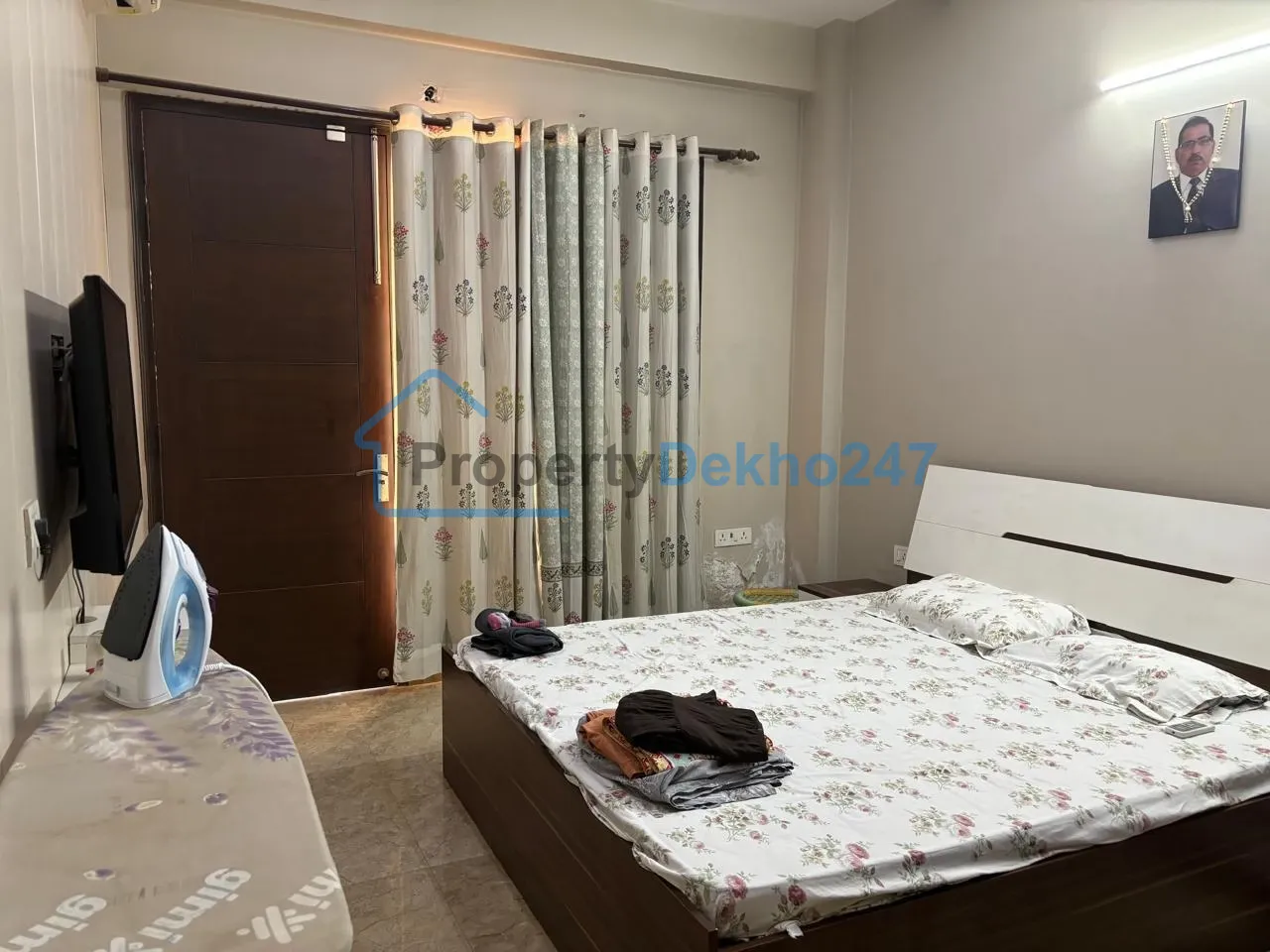
Owner Verified
Vipul World
Status: Ready to move
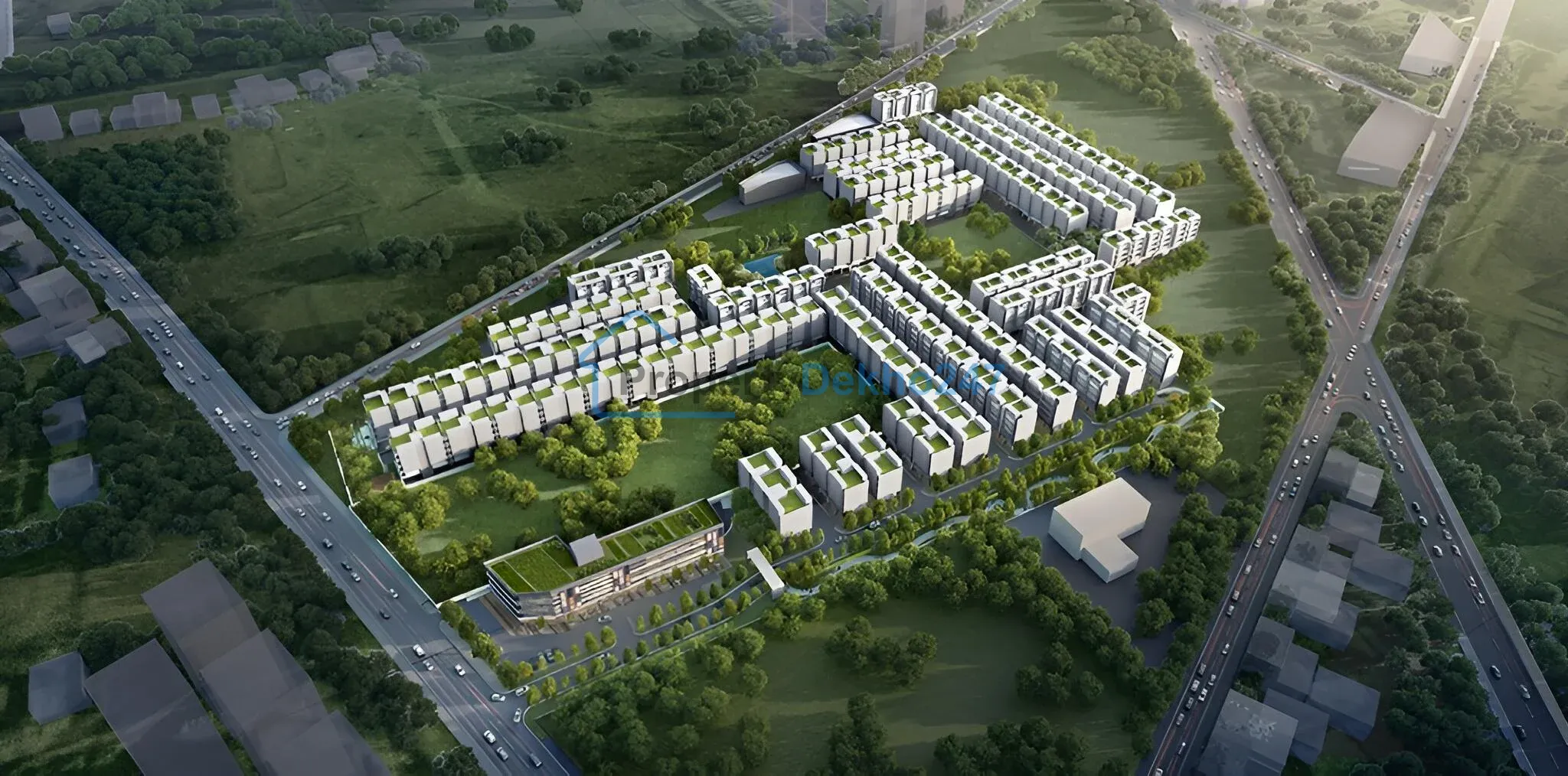
Owner Verified
Signature Global City 93
Status: Ready to move

Owner Verified
BPTP Park Generations
Exact floor hidden for Owner Privacy.Status: Ready to move
Owner Verified
Emaar Palm Heights
Exact floor hidden for Owner Privacy.Status: Ready to move
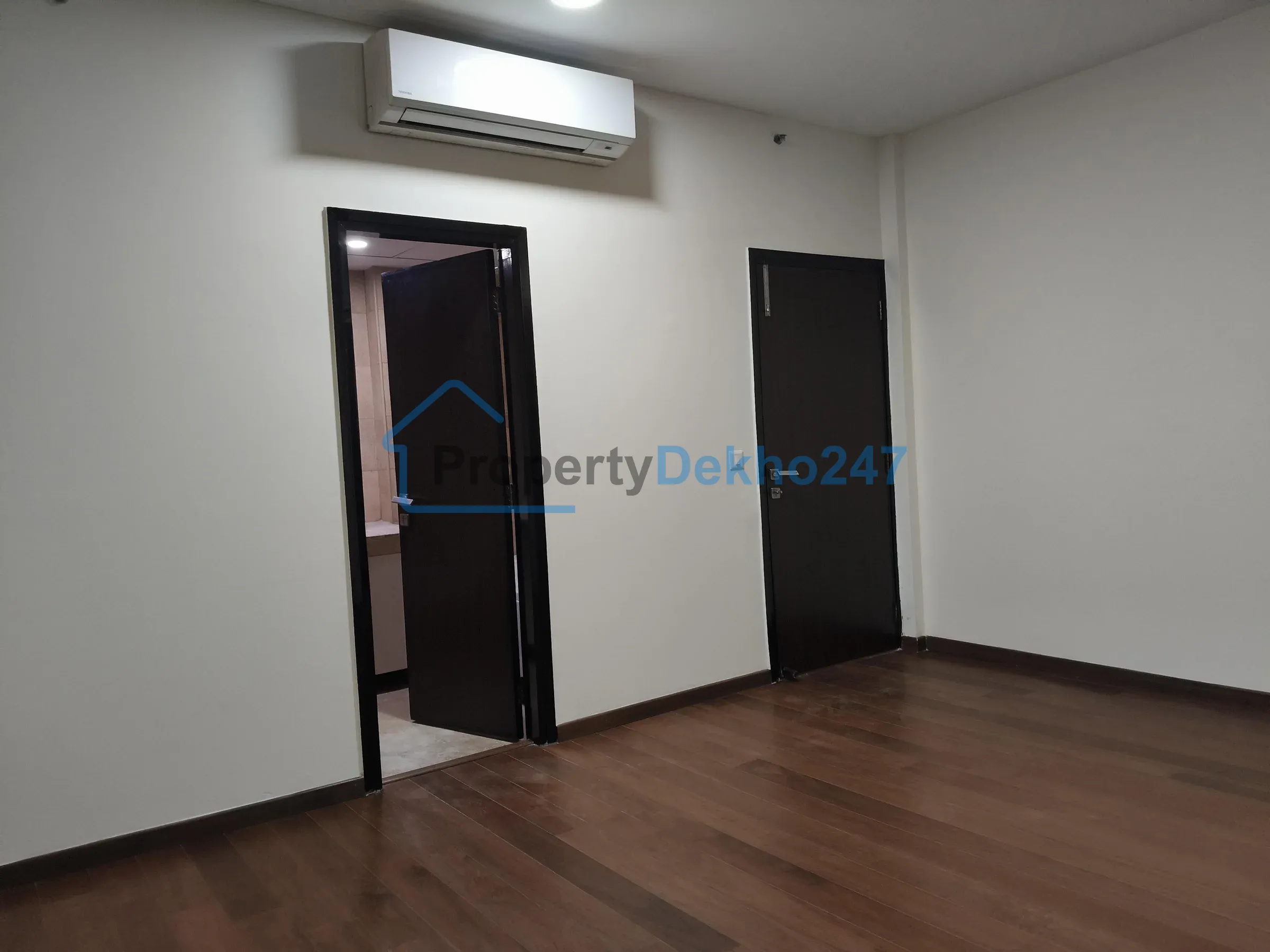
Owner Verified
Tata Primanti
Exact floor hidden for Owner Privacy.Status: Ready to move

Owner Verified
TARC Maceo
Exact floor hidden for Owner Privacy.Status: Ready to move

Owner Verified
Godrej Zenith
Exact floor hidden for Owner Privacy.Status: Under Construction
Owner Verified
Signature Global The Millennia 3
Exact floor hidden for Owner Privacy.Status: Ready to move

Owner Verified
South City 2
Status: Ready to move
Related Properties
Owner Verified
MRG World Ultimus
Exact floor hidden for Owner Privacy.Status: Ready to move
Owner Verified
DLF Express Greens
Exact floor hidden for Owner Privacy.Status: Ready to move
Owner Verified
DLF New Town Heights 2
Exact floor hidden for Owner Privacy.Status: Ready to move
Owner Verified
Vipul World
Status: Ready to move
Owner Verified
Signature Global City 93
Status: Ready to move
Owner Verified
BPTP Park Generations
Exact floor hidden for Owner Privacy.Status: Ready to move
Owner Verified
Emaar Palm Heights
Exact floor hidden for Owner Privacy.Status: Ready to move
Owner Verified
Tata Primanti
Exact floor hidden for Owner Privacy.Status: Ready to move
Owner Verified
TARC Maceo
Exact floor hidden for Owner Privacy.Status: Ready to move
Owner Verified
Godrej Zenith
Exact floor hidden for Owner Privacy.Status: Under Construction
Owner Verified
Signature Global The Millennia 3
Exact floor hidden for Owner Privacy.Status: Ready to move
Owner Verified
South City 2
Status: Ready to move